
The Standard · MMXXVI

The Standard

A THC percentage cannot tell you whether cannabis is any good. So we built a better way to look - and a shared language to talk about what we find.

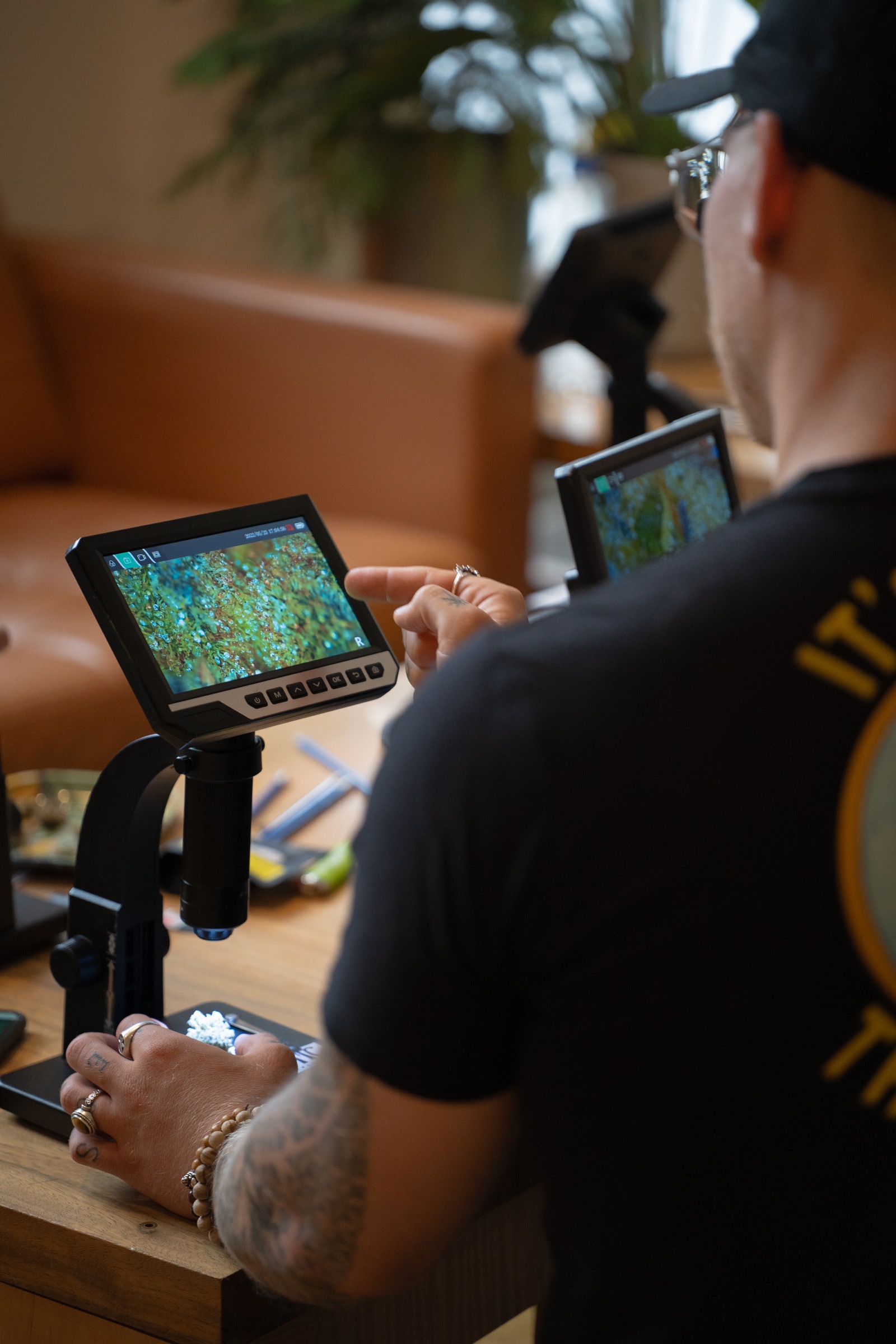
A trained grader reading trichome development under a digital microscope
I. Why we built this

The industry got stuck on a number.

For years, the only thing the cannabis industry could agree to print on a package was a THC percentage. It became the number that sells - and the number that lets exceptional flower sit unsold beside high-potency mediocrity. Anyone who has worked a counter knows the frustration: the percentage on the label rarely matches what is actually in the jar, and it tells a customer almost nothing about how a product will smell, taste, or feel.

Terpene numbers were supposed to fix it. They did not. The testing is inconsistent, the figures are gamed, and a lab sheet still cannot describe an experience. The whole trade has been trying to talk about quality with a vocabulary of two or three unreliable numbers.

So we made something better: a single, standardised way to grade cannabis by what you can actually observe - thorough enough to be trusted, simple enough that any trained budtender can use it on a busy floor. It lets us move past the percentage and toward a more nuanced, honest way of understanding cannabis, and of talking about it.

When the whole industry can describe quality in the same language, everybody wins - growers, stores, and the person holding the jar.


II. What it is

Observing, not assessing.

The Sensemillier Standard is a structured way to grade cannabis quality by what you can actually observe - aroma, appearance, trichomes, cure, flavour, and how it smokes - answered as simple sensory questions and scored on a five-point scale, never by potency or price.

The grader is never asked "is this good?" They are asked what they see, smell, and taste - one trait at a time, from a simple set of sensory-anchored options. Is the aroma faint or loud? Are the trichomes clear, cloudy, or amber? How does the ash burn? The person observes. The platform does the judging, the same way every time, so the result does not depend on who was holding the jar or what mood they were in.

That is what makes it a standard rather than an opinion. And it starts where it should: with qualified budtenders and evaluators grading the products on the shelves of the stores where they work. Meet the graders.


III. How it works

A simple walk through every trait.

An evaluation is a guided walkthrough. The grader moves through the jar and then the smoke, answering plain questions along the way. Nothing is left to a gut impression, and nothing needs a lab.

In the jar

What the product tells you before it is ever lit.

  • Aroma. Intensity, complexity, and what you actually smell.
  • Appearance. Bud structure, colour, and trim.
  • Trichomes. Coverage, head development, and ripeness under the scope.
  • Cure. Moisture and feel, by the squeeze.

In the smoke

How it actually consumes, for the formats that are lit or vaporised.

  • Dry pull. The aroma and draw before it is lit.
  • Flavour. How it tastes from first puff to finish.
  • Ash & smoothness. How cleanly it burns and how it feels going down.
Every product lands on one simple scale: zero to five.
Built from what was observed - never from a potency number.

How a product made someone feel is captured on its own, through the Cannabis Consumption Compass, and kept separate from the quality score. Aroma tells you what it is. Effects tell you how it was perceived by the grader who tried it, on the day they tried it. We keep the two honest by never mixing them.

Curious how it feels to grade? The whole process is open on the free plan - walk a product through it yourself, no cost.

Try the grading process free


V. Two ways in

Graded in store, and the mark it leads to.

From the stores Live now

Products graded by qualified budtenders on the floor of licensed stores - the ones they carry, grade, and stand behind. Each carries the grader's full record. Browse the stores and their graders.

  • Published and updated by the store, instantly.
  • The full grading record, in the grader's own words.
  • Linked straight to where you can buy it.
Certified Coming soon

The next chapter: a batch submitted by its producer and graded blind by an independent panel. Products that pass will carry the Herbarium Mark. Opening to producers as the store network grows.

  • Independent, blind evaluation.
  • A published record for the specific batch.
  • The Mark, earned rather than bought.

VI. Why it matters

A shared language lifts everyone.

When quality can only be described by a potency number, the whole trade competes on the wrong thing. Growers chase THC instead of terroir. Stores stock what tests high instead of what smokes well. Customers pay for a percentage and hope.

Give everyone the same honest vocabulary and the incentives change. A grower who cures beautifully can prove it. A store can point to why a product earned its shelf. A customer can find the right jar instead of the strongest one. That is the ripple effect we are after - a category that finally rewards craft.

This is bigger than any one score. It is a better way to talk about cannabis.


VII. What we don't do

We don't grade potency.

THC and terpene numbers are reported, never scored. A percentage is not a quality.

We don't grade on a gut feeling.

No one is asked “is this good?” Every result is built from individual, observable traits - so it does not depend on who was holding the jar.

We don't score the high.

How a product makes you feel is captured on its own, and kept out of the quality score. Aroma tells you what it is; effects tell you how it landed for the grader who felt it - one person, one occasion.

We don't hide the method.

Every trait we look at is laid out on this page, and the whole grading process is open to try on the free plan.

We don't chase coverage.

A Herbarium shelf is a short list of what is genuinely worth it, not every product in the store.

Help set the standard with us.

Run a store? Put your shelf on the record. Just curious? The grading process is free to try.